Ready

Dropdown Button

Dropdown buttons display a list of choices when clicked. It is a two step process that provides greater specificity to a singular action.

Ready

Dropdown Button

Dropdown buttons display a list of choices when clicked. It is a two step process that provides greater specificity to a singular action.

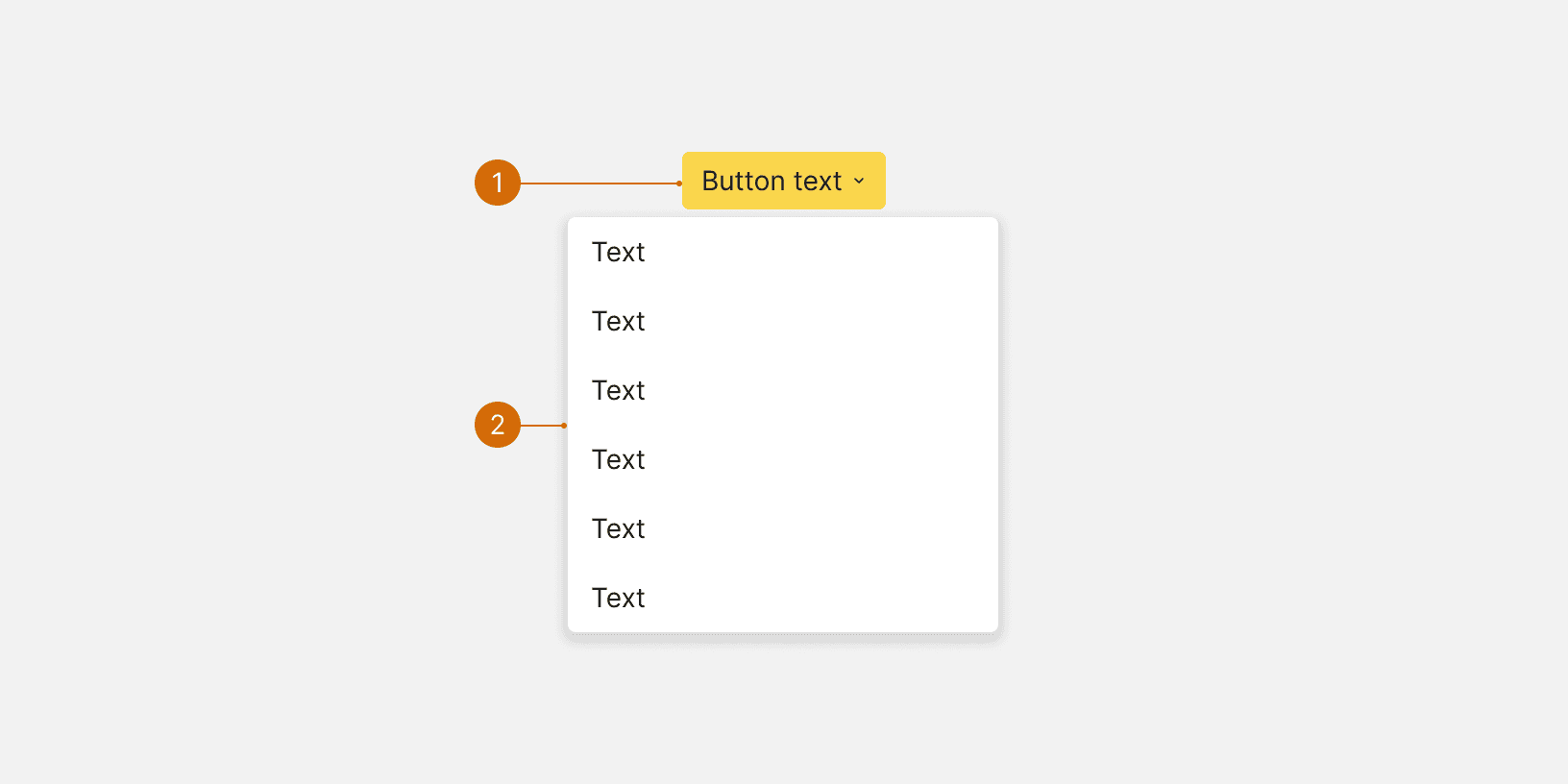
Anatomy

  1. Button

  2. Picklist

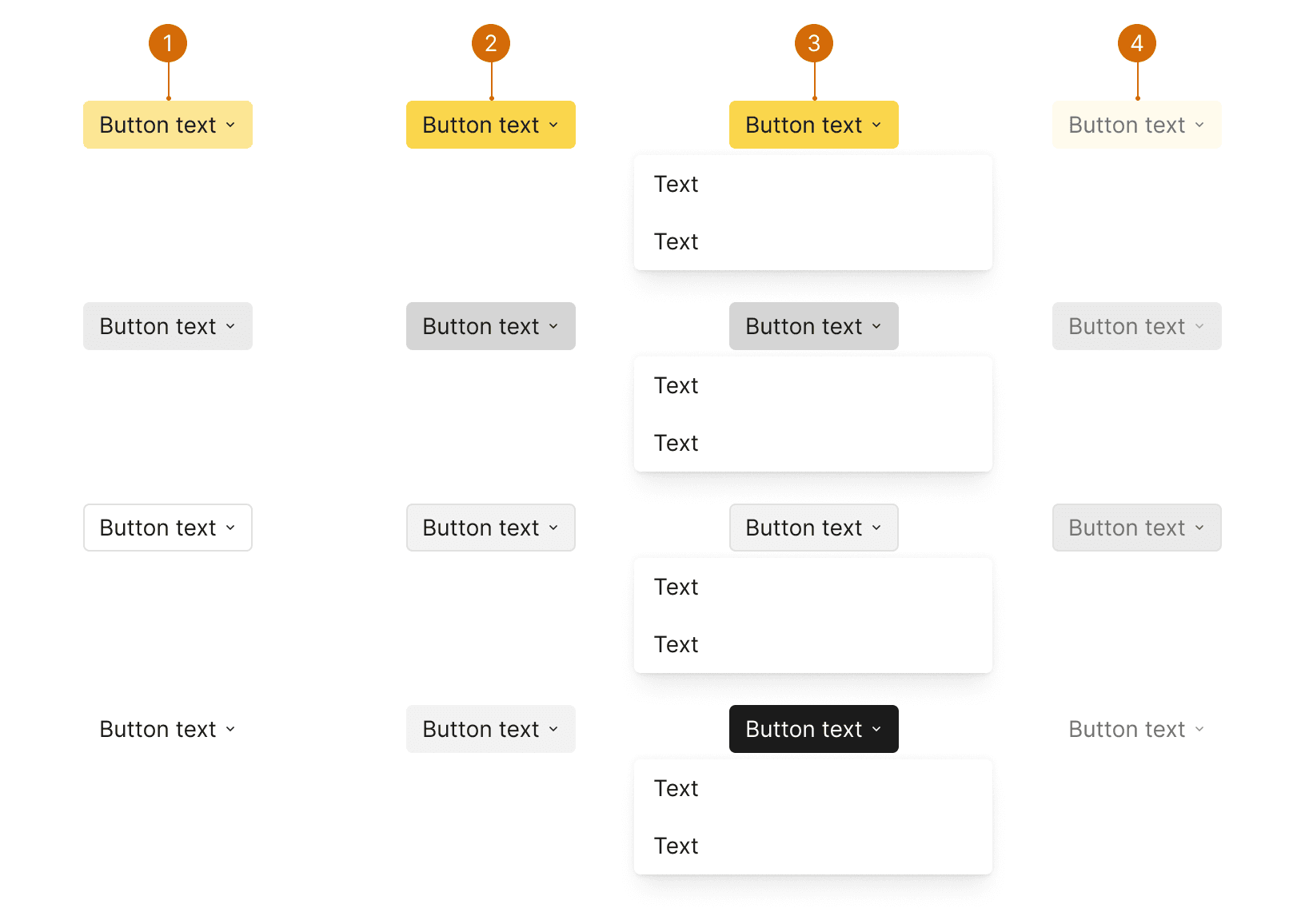
Variants

  1. Primary

  2. Secondary

  3. Transparent

  4. Heading

  5. Button Group with Dropdown

States

  1. Default

  2. Hover

  3. Pressed

  4. Disabled

Best Practices

1

Long Dropdowns

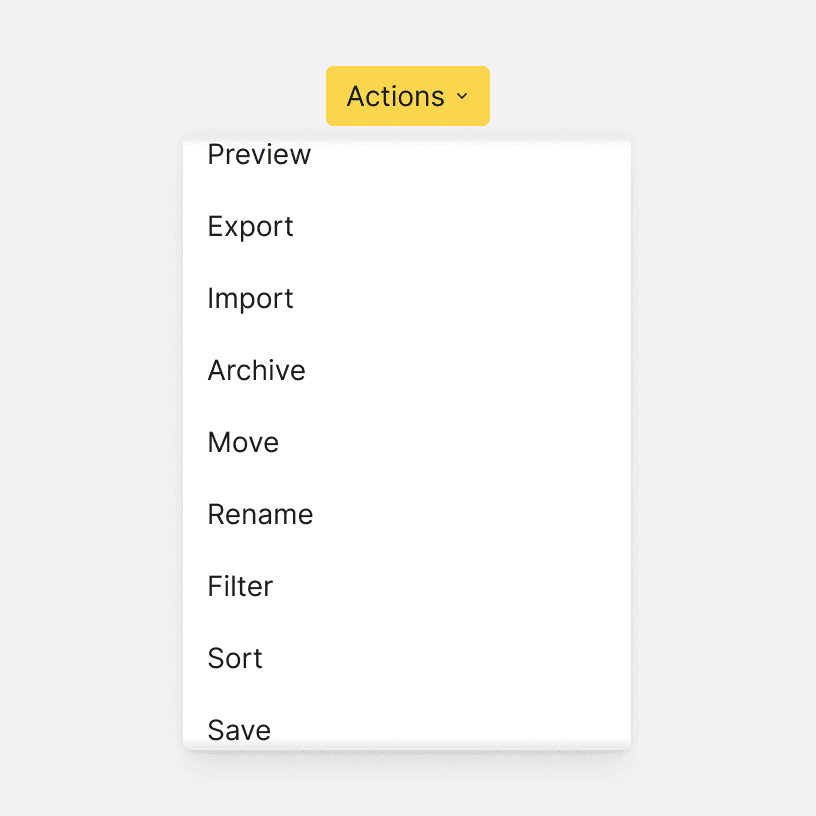
Avoid dropdowns when there are more than 10 or fewer than 5 options. Long of dropdowns will require scrolling and will not allow users to see all choices. See Fitt’s Law. Too few options in a dropdown could be better suited for a different treatment to get to context more quickly (button, button group, toggle).

Do

Don't

2

Choice Visibility

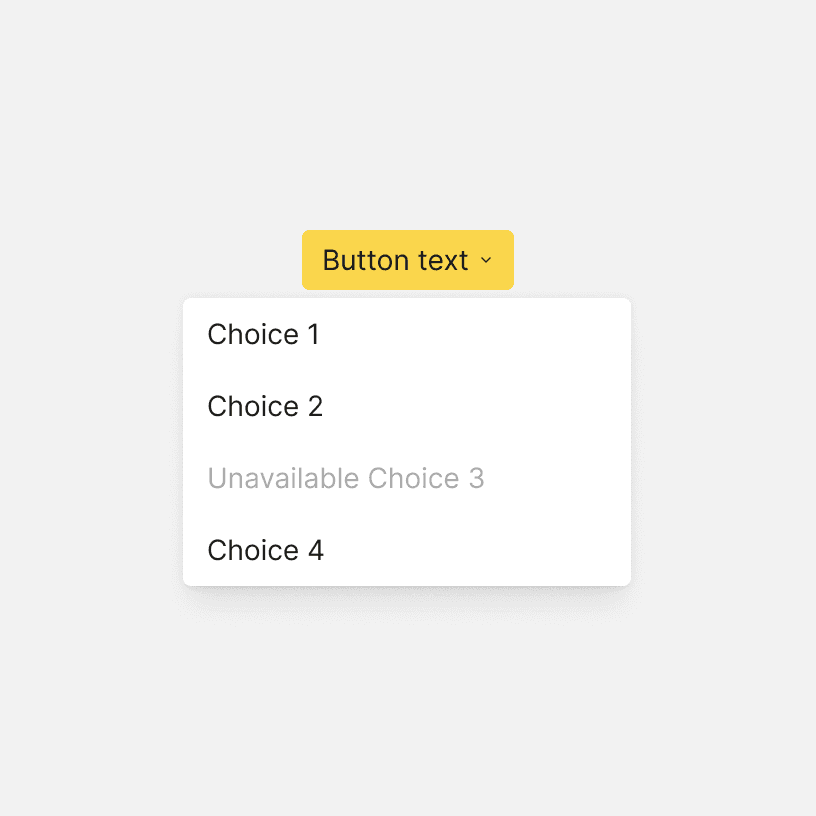
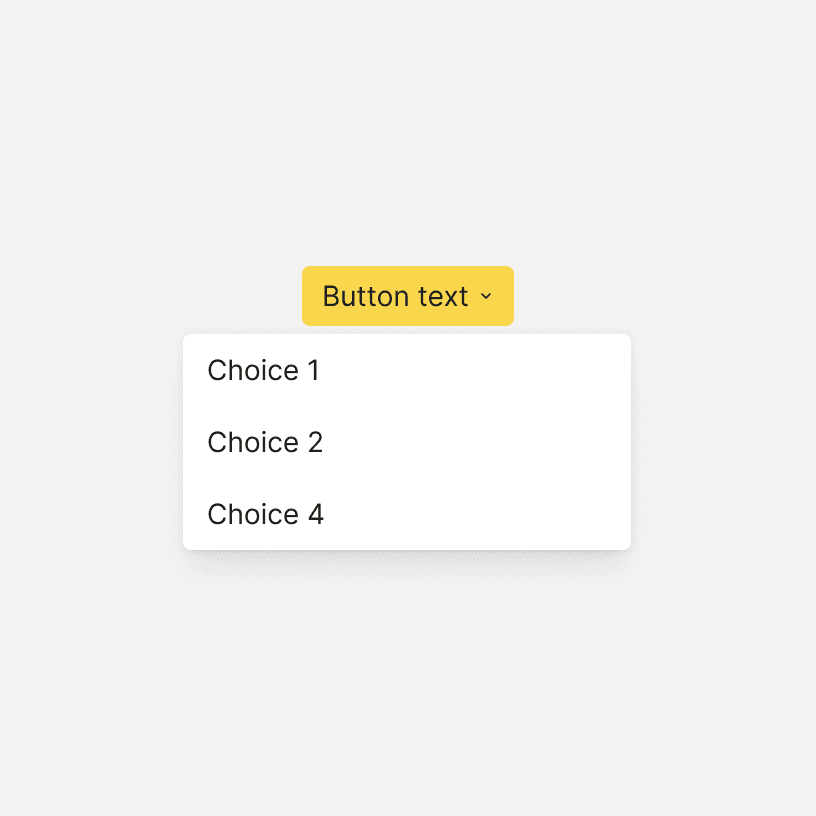
Keep dropdown button choices in view even if disabled.¹  If disabled items are removed, the interface loses consistency and hinders the learning curve for the user.

Do

Don't

3

Button Group with Dropdown

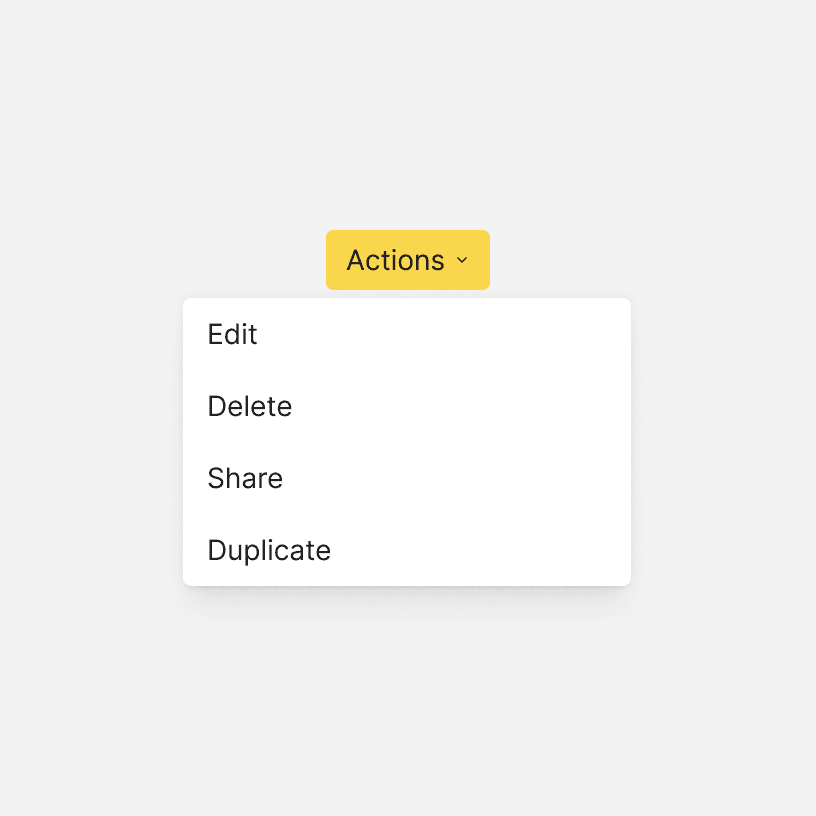
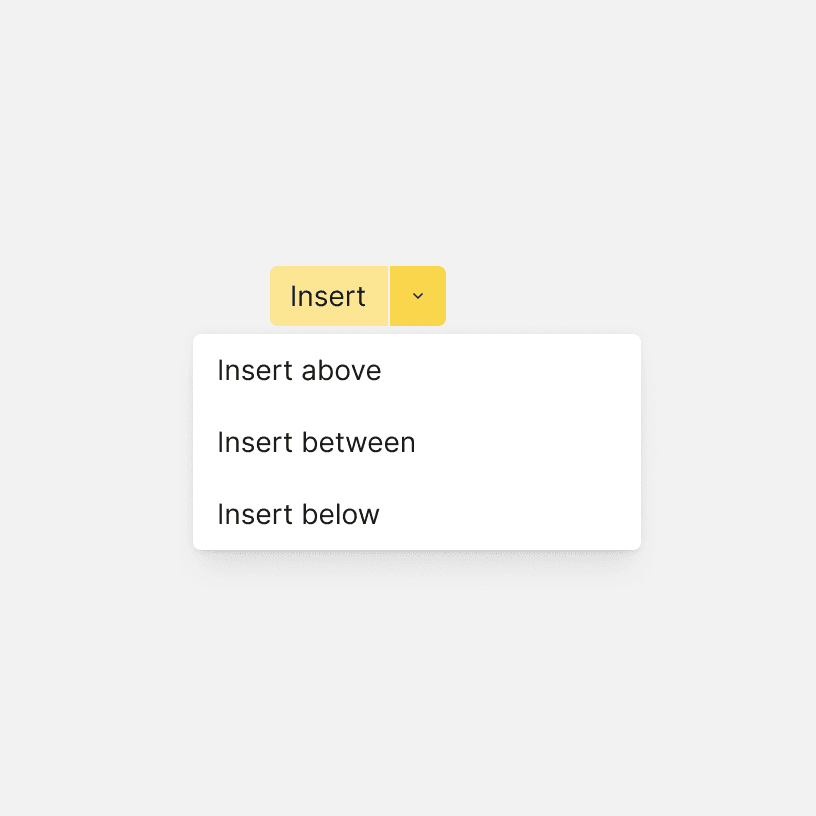
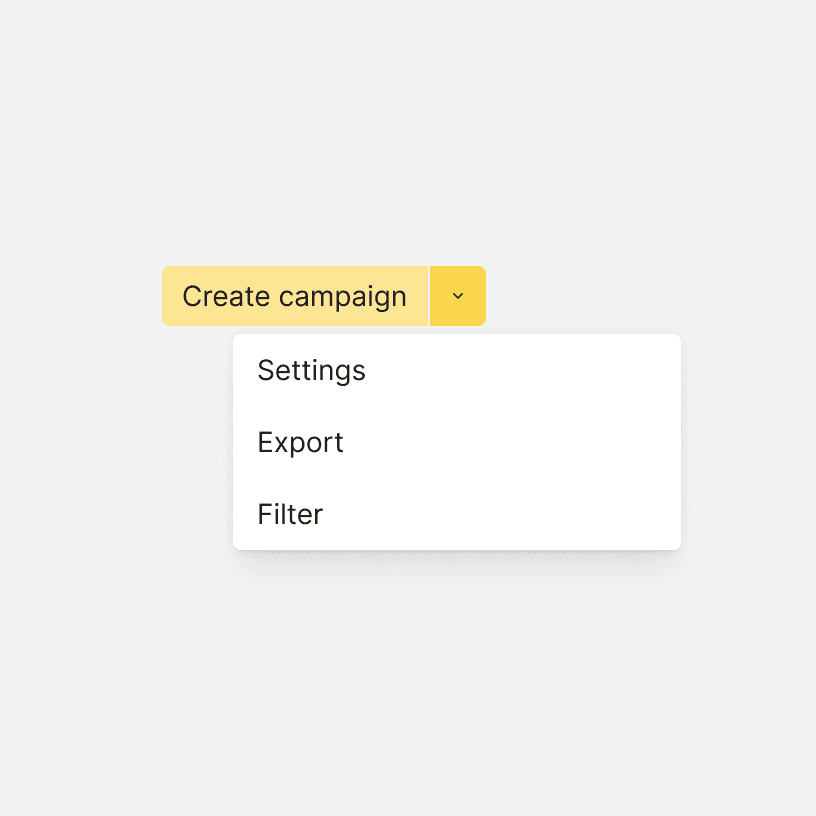
Use a button group with a dropdown button when you want to group a default action with several variations of that same action.

Do

Don't

Content

1

Short

Keep the button label short. It should clearly indicate the purpose of the selection and what they will find in the menu. The button label should be a verb or verb phrase.

2

Sentence case

Use sentence case--only capitalize the first word.

3

Contruction

Dropdown menu items should be short and written using parallel construction. For example, every item should be a noun or a verb. Avoid repeating words if possible.

Do

Create campaign

Don't

Campaigns

4

Order

Options should be ordered in a logical manner, such as by frequency-of-use, or alphabetically as a fallback. Group similar options together to make them easier to scan.
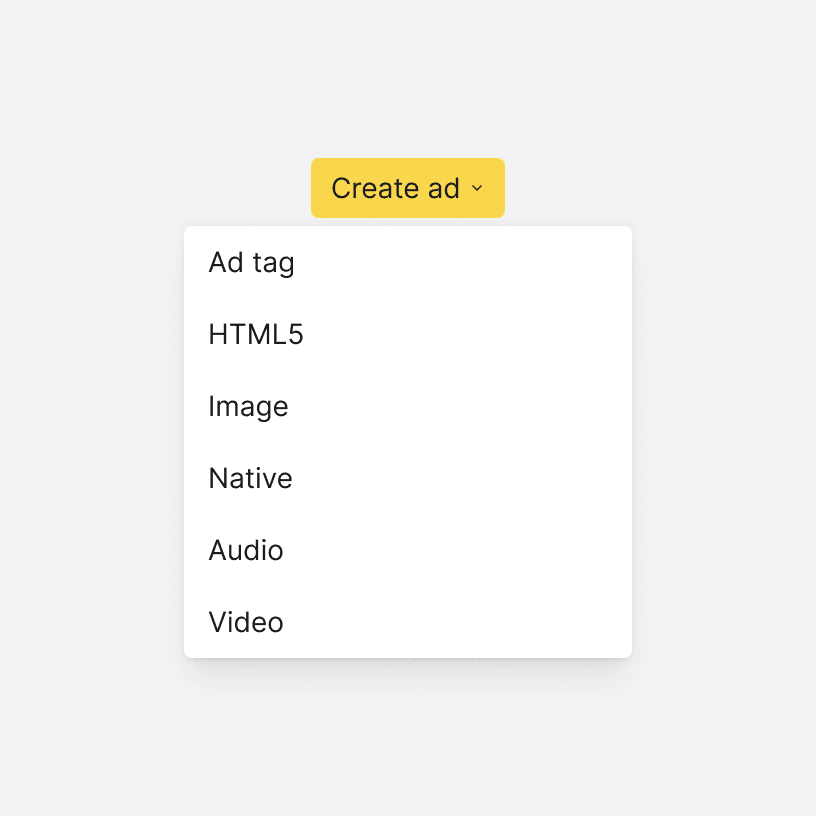
Do
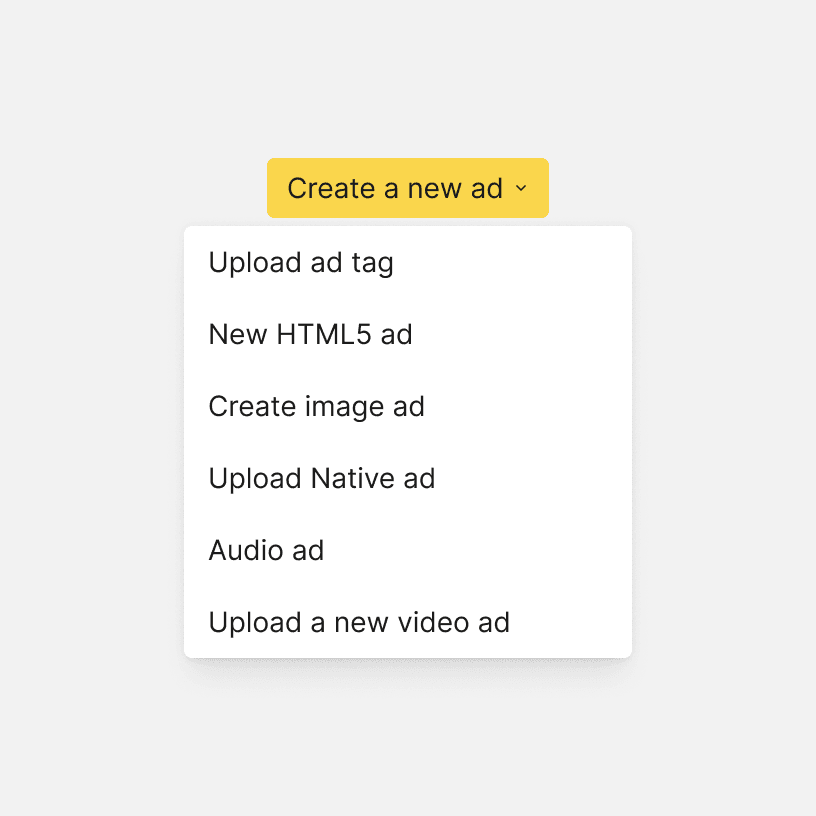
Don't
© 2026 Basis Technologies